Most candidates think interview success is about sounding confident, polished, and impressive. But in reality, strong interviews depend on something more important: interview response accuracy.
Interview response accuracy means how well your answer matches the question, the job role, and the evaluation criteria used by the interviewer.
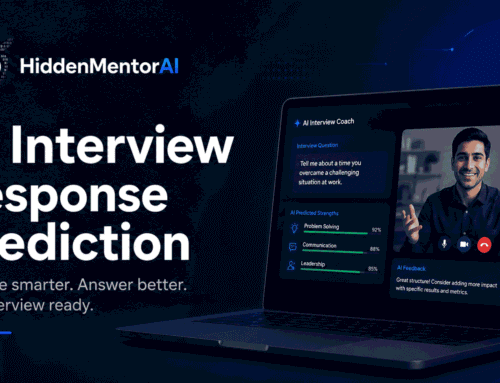
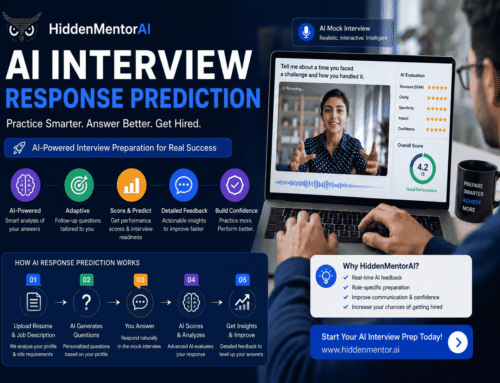
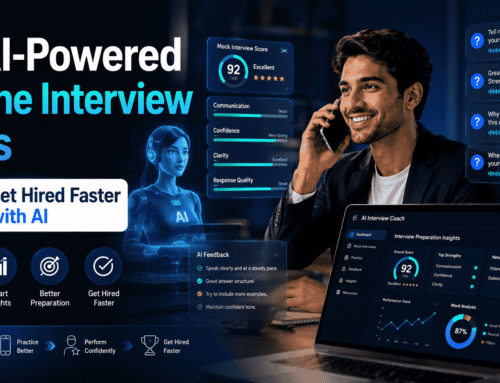
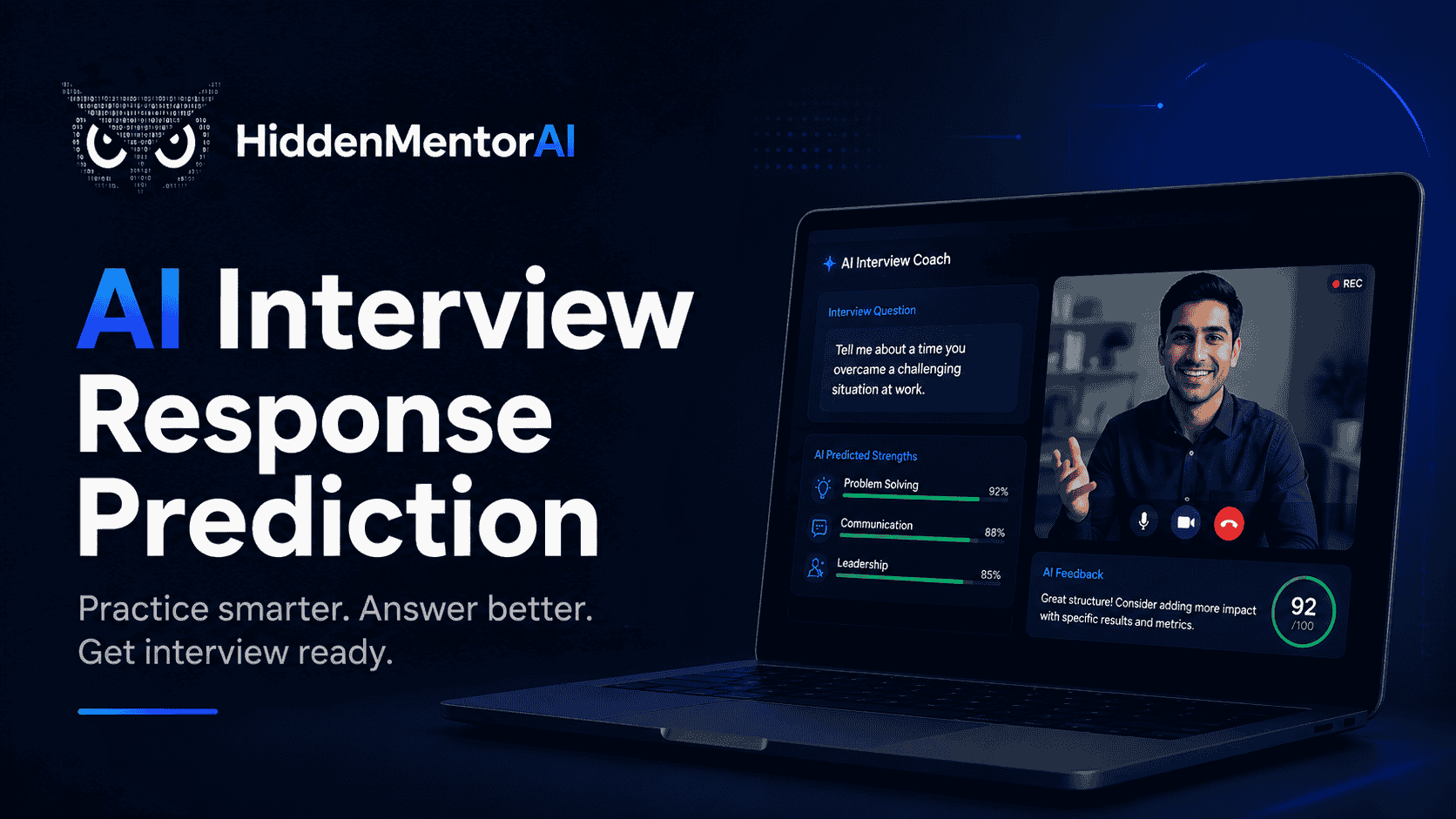
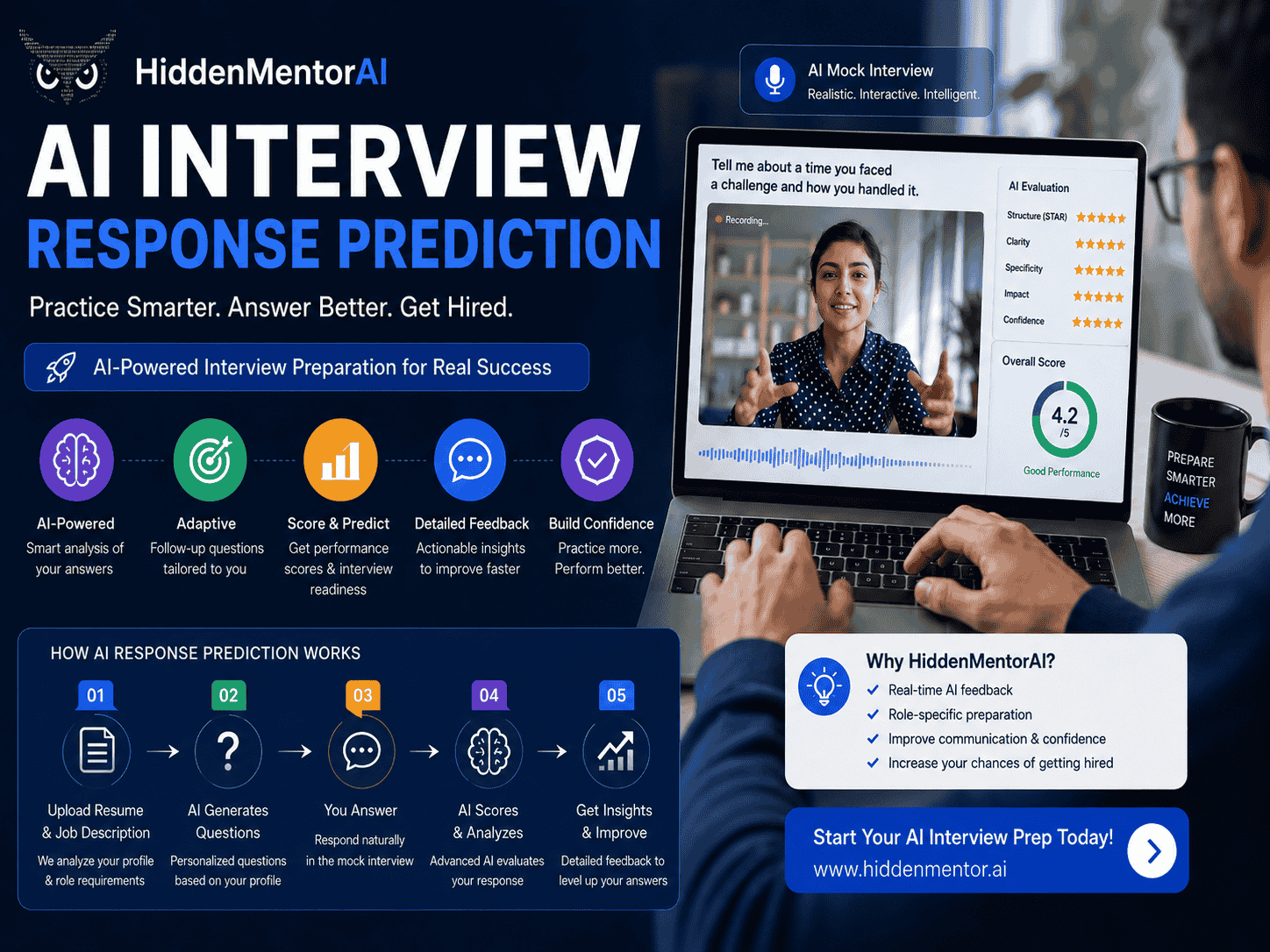
With AI interview response accuracy tools like HiddenMentorAI, candidates can practice smarter, improve answer structure, and prepare with clear feedback before the real interview.
📚 Table of Contents
- What Is Interview Response Accuracy?
- Why Interview Response Accuracy Matters
- How Interviewers Evaluate Answers
- Common Mistakes That Reduce Accuracy
- How to Improve Interview Response Accuracy
- How HiddenMentorAI Helps
- FAQ
💡 What Is Interview Response Accuracy?
Interview response accuracy measures how directly and clearly your answer addresses the question being asked. It is not only about speaking well. It is about giving the interviewer the exact evidence they need to evaluate you fairly. A high-accuracy interview answer includes three important elements:
- Relevance: Your answer directly answers the question.
- Evidence: You provide a real example from your experience.
- Outcome clarity: You explain the measurable result or business impact.
For example, if the interviewer asks about problem-solving, your answer should clearly show the problem, your action, and the result. If you only tell a long story without showing your contribution, your answer may sound good but still score poorly.
🚀 Why Interview Response Accuracy Matters
In structured interviews, hiring teams often use scorecards or rubrics to evaluate candidates. That means they are not only listening for confidence — they are looking for specific competency signals. Interviewers may evaluate:
- Communication clarity
- Problem-solving ability
- Leadership behavior
- Decision-making
- Team collaboration
- Technical understanding
- Business impact
If your answer does not match the competency being tested, your score can drop even if your delivery sounds professional.
Simple rule: A clear, relevant answer beats a polished but vague answer.
📊 How Interviewers Evaluate Your Answers
Most structured interviews evaluate answers based on consistency, evidence, and role relevance.
| Evaluation Area | What Interviewers Look For | How to Improve |
|---|---|---|
| Relevance | Does your answer match the question? | Listen carefully and answer the exact question asked. |
| Specificity | Do you give a real example? | Use examples from work, projects, internships, or practical experience. |
| Action | What did you personally do? | Use “I” statements and explain your contribution clearly. |
| Result | What changed because of your action? | Add numbers, outcomes, or measurable impact. |
| Structure | Is your answer easy to follow? | Use the STAR method for behavioral questions. |
❌ Common Mistakes That Reduce Interview Response Accuracy
Many candidates lose points because their answers are not accurate enough for the question being asked.
1. Giving a General Answer
Saying “I am a good team player” is not enough. Interviewers want proof through a real example.
2. Talking Too Much About the Situation
Some candidates spend most of the answer explaining background details and forget to explain their actual action.
3. Skipping the Result
Without a result, your answer feels incomplete. Always explain what happened after your action.
4. Using “We” Too Much
Teamwork matters, but the interviewer is evaluating you. Clearly explain what you personally contributed.
5. Sounding Over-Rehearsed
Memorized answers can feel robotic. A better approach is to prepare flexible examples and adapt them naturally.
✅ How to Improve Interview Response Accuracy
Improving your interview answers is a skill. With the right structure and practice, you can make your responses more relevant, clear, and impactful.
1. Use the STAR Method
The STAR method helps you structure behavioral interview answers clearly.
- Situation: What was the context?
- Task: What was your responsibility?
- Action: What did you personally do?
- Result: What was the outcome?
2. Keep Answers Focused
Aim for answers around 90–120 seconds. This gives you enough time to explain your example without losing the interviewer’s attention.
3. Add Measurable Results
Numbers make your answers stronger and easier to remember.
Weak: “I improved the process.” Strong: “I reduced manual effort by 30% and improved reporting turnaround time by two days.”
4. Prepare Role-Specific Examples
Before the interview, review the job description and prepare examples for the main skills listed. For example:
- If the role asks for leadership, prepare a leadership story.
- If the role asks for problem-solving, prepare a problem-solving story.
- If the role asks for communication, prepare a stakeholder communication story.
5. Practice Follow-Up Questions
Strong interviewers often ask follow-up questions like:
- What was your exact contribution?
- How did you measure success?
- What challenge did you face?
- What would you do differently next time?
Practicing these follow-ups improves your answer depth and interview confidence.
🧠 How HiddenMentorAI Helps Improve AI Interview Response Accuracy
HiddenMentorAI helps candidates practice interviews with AI-powered guidance, feedback, and role-specific preparation. Instead of guessing whether your answer is strong, HiddenMentorAI helps you understand what needs improvement.
With HiddenMentorAI, candidates can:
- 🎯 Practice role-specific interview questions
- 🤖 Improve AI interview response accuracy
- 📊 Get feedback on answer structure and clarity
- 🧩 Build STAR-based answers
- 💬 Improve communication and confidence
- 🚀 Prepare for behavioral, technical, and final interviews
- 📈 Learn how to add measurable results to answers
Whether you are preparing for software engineering, DevOps, data analytics, product management, business analyst, finance, or leadership roles, HiddenMentorAI gives you a smarter way to improve your interview performance.
📌 Key Takeaways
| Key Point | What It Means |
|---|---|
| Accuracy beats polish | A relevant, evidence-based answer is stronger than a vague polished answer. |
| STAR improves structure | It helps interviewers understand your situation, action, and result clearly. |
| Numbers build credibility | Measurable outcomes make answers more convincing. |
| Follow-ups matter | Strong candidates can explain details beyond their first answer. |
| HiddenMentorAI supports better preparation | AI-powered practice helps candidates improve answer quality before interviews. |
🎯 Final Thoughts
Interview response accuracy is one of the most important parts of modern interview preparation. You do not need to sound perfect. You need to answer the question clearly, give real evidence, and show measurable impact. With HiddenMentorAI, candidates can practice smarter, improve answer accuracy, and walk into interviews with more confidence.
❓ FAQ
What is interview response accuracy?
Interview response accuracy measures how well your answer matches the interviewer’s question, job criteria, and evaluation rubric.
How can I improve interview response accuracy?
Use the STAR method, answer the exact question, give specific examples, and include measurable results.
How does HiddenMentorAI help with interview preparation?
HiddenMentorAI helps candidates practice interview questions, improve answer structure, receive AI-powered feedback, and build confidence.
What is the best answer length for interviews?
For behavioral questions, 90–120 seconds is usually a strong answer length. It gives enough detail without becoming too long.
Why are measurable results important in interview answers?
Measurable results help prove your impact. They make your answer more credible, specific, and memorable. 🚀 CTA SECTION
Want to Improve Your Interview Answer Accuracy? 🎯
Practice role-specific questions, improve STAR answers, and get AI-powered feedback before your real interview.
Start Practicing with HiddenMentorAI