In the fast-paced world of tech hiring, where algorithms and code dominate headlines, a quiet revolution is underway: the rise of emotional intelligence (EQ) as a make-or-break factor for success. As companies like Google, Meta, and startups alike scale remote teams and tackle complex, collaborative projects, interviewers are shifting focus from pure technical prowess to how candidates navigate human dynamics—think empathy in cross-functional teams, resilience under pressure, and conflict resolution in high-stakes sprints.
Enter behavioral interview questions: those “Tell me about a time…” prompts designed to uncover your past actions as predictors of future performance. But in 2025, with AI tools like HiddenMentor.ai at your fingertips, preparing for these isn’t just about storytelling anymore. It’s about analyzing your stories with Natural Language Processing (NLP) to ensure they hit the mark on structure (hello, STAR method) and emotional depth.
At HiddenMentor.ai, our Interview Assistant for Success empowers you to simulate these scenarios, record responses, and get instant AI-driven feedback. In this post, we’ll dive into strategies for acing behavioral questions with an EQ twist, spotlight a trending KDnuggets tutorial that’s racked up over 5K shares, and show you how NLP supercharges your prep. Ready to turn “situational stress” into “strategic strength”? Let’s unpack it.
Why Emotional Intelligence Matters More Than Ever in Tech Roles
Tech isn’t just about building the next big app—it’s about building trust in diverse, global teams. According to a 2025 LinkedIn report, 78% of tech leaders prioritize EQ in hires, up from 62% last year, because roles in software engineering, product management, and data science now demand navigating ambiguity, feedback loops, and inclusive decision-making.
Behavioral questions zero in on EQ by probing real-world scenarios:
- Self-Awareness: “Describe a time you received constructive criticism. How did it impact your work?”
- Empathy: “Tell me about a conflict with a teammate. How did you resolve it?”
- Adaptability: “Share an example of a project pivot. What emotions did that trigger, and how did you adapt?”
These aren’t fluff—they reveal if you can foster psychological safety, a key driver of innovation per Google’s Project Aristotle. But here’s the game-changer: Without EQ, even brilliant coders flame out in collaborative environments. With it? You thrive.
The STAR Method: Your Storytelling Framework
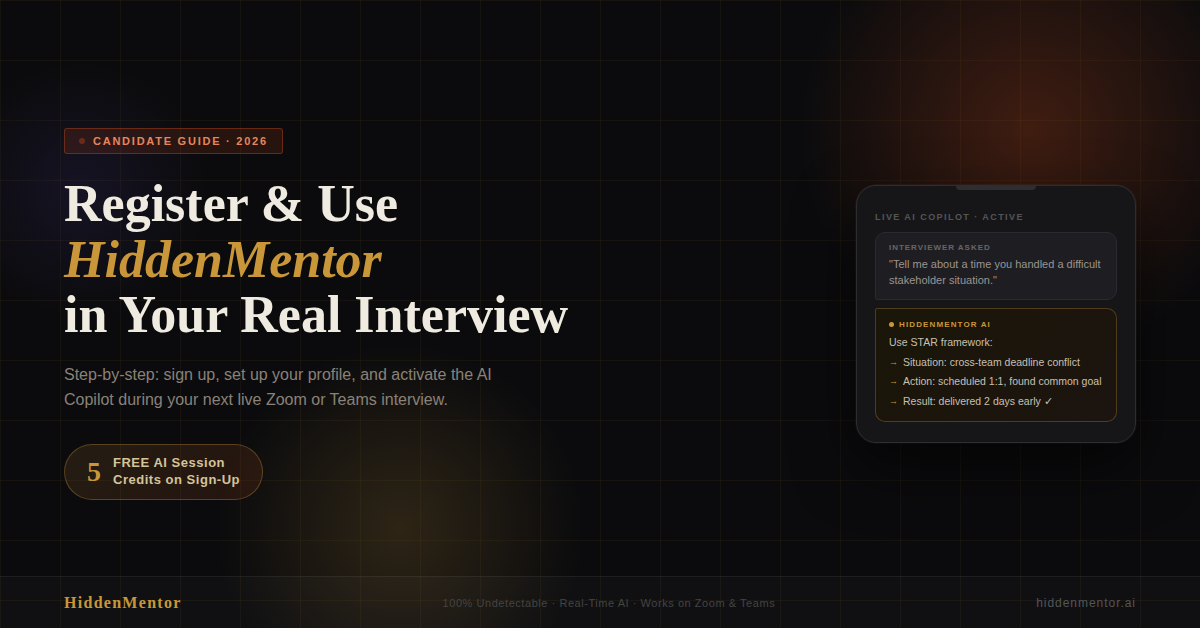
Enter the STAR method—Situation, Task, Action, Result—a proven structure for behavioral responses that keeps you concise and impactful. It’s not new, but in tech interviews, it’s essential for demonstrating clarity amid chaos.
- Situation: Set the scene (e.g., “In my last role at a fintech startup, our API integration hit a snag during a product launch.”).
- Task: Your role (e.g., “As lead dev, I needed to rally the team to debug under a 48-hour deadline.”).
- Action: What you did, infused with EQ (e.g., “I scheduled a quick empathy check-in, acknowledging everyone’s frustration, then delegated based on strengths.”).
- Result: Quantifiable wins (e.g., “We fixed it 12 hours early, boosting team morale—evidenced by a 20% drop in voluntary overtime requests post-launch.”).
The catch? Many candidates ramble, missing the emotional thread that makes STAR memorable. That’s where NLP steps in.
Actionable Strategies: Level Up with HiddenMentor.ai
Ready to implement? Here’s a 3-step playbook tailored for tech pros:
- Simulate & Record: Use HiddenMentor.ai’s mock interview mode to tackle EQ-heavy prompts. Record via voice or text—our JS-powered app handles it seamlessly.
- NLP Feedback Loop: Get instant breakdowns: “Your STAR is 80% aligned, but amp up empathy in Actions for +15% EQ score.” Visualize gaps with our interactive dashboard.
- Iterate with EQ Focus: Re-record, targeting tweaks like active listening phrases. Track progress over sessions—users see 40% confidence boosts in weeks.
Pro Example: For “Describe a team failure,” a weak response might score low on “Result” sentiment. NLP flags it, you revise to highlight growth (“We debriefed with vulnerability shares, turning it into a 15% process efficiency gain”), and boom—interview-ready.
Wrapping Up: EQ + AI = Your Tech Career Superpower
In 2025’s tech landscape, behavioral questions aren’t hurdles—they’re highlight reels for your EQ. By weaving NLP into STAR prep, you’re not just answering; you’re strategizing for resonance. The KDnuggets tutorial proves it: With 5K+ shares, it’s clear the community craves these tools.
At HiddenMentor.ai, we’re all about demystifying this. Head to https://hiddenmentor.ai/home, enable JS, and start your free session today. Simulate a behavioral deep-dive, get NLP insights, and emerge ready to lead with heart and code.
What’s your go-to STAR story? Drop it in the comments—we might feature it in our next roundup. And if you’re prepping for that dream role, tag a friend who needs this boost. Success isn’t solo; it’s shared.
HiddenMentor.ai: Your AI wingman for interview wins. Because tech needs more humans who code and connect.